Miyajima’s Summer Cicadas: Heard but Unseen, Relaxing in the Tall Trees of ‘God’s Island’
#History#Nature
The summer in Miyajima is hot.
It's hot, but there are surprisingly many shaded areas under trees and out of the sun, and there's a breeze from the sea, so it's not unbearable.
Thinking so, on August 1st, in the middle of summer, I took my children to Miyajima.
There was an event at Miyajima Public Aquarium where you could get a pair of rhinoceros beetles for free.
To make sure we got the rhinoceros beetles before they ran out, we crossed over to Miyajima first thing in the morning and started walking towards the aquarium.
It takes about 20 minutes to walk to the aquarium even at an adult's pace, so we took our time, leisurely spotting fish in the sea, greeting deer, and drinking juice on benches.
The aquarium is located along the coast, a little distance from the main street's shopping arcade, and surrounded by lush greenery, giving it a slightly cooler feel.
The rhinoceros beetles we were looking for were prepared in large quantities, and we were able to receive them without any problems.
It had been a while since I'd toured the inside of the facility.
By the way, Miyajima Public Aquarium isn't that large in scale, but its exhibits show a great deal of care and are interesting.
Despite being an aquarium, they manage the temperature of the breeding environment so you can see rhinoceros beetles from larva to adult all year round.
On the backyard tour, despite it being an aquarium, we saw many dragonfly larvae like Miyajima dragonflies being bred, and my youngest, who loves insects, was very satisfied.
We also got to pet seals during the interaction experience, and our hands were nibbled by doctor fish at "Hatsukoi-an" in a separate building, which we thoroughly enjoyed.
Now, the problem was the return journey.
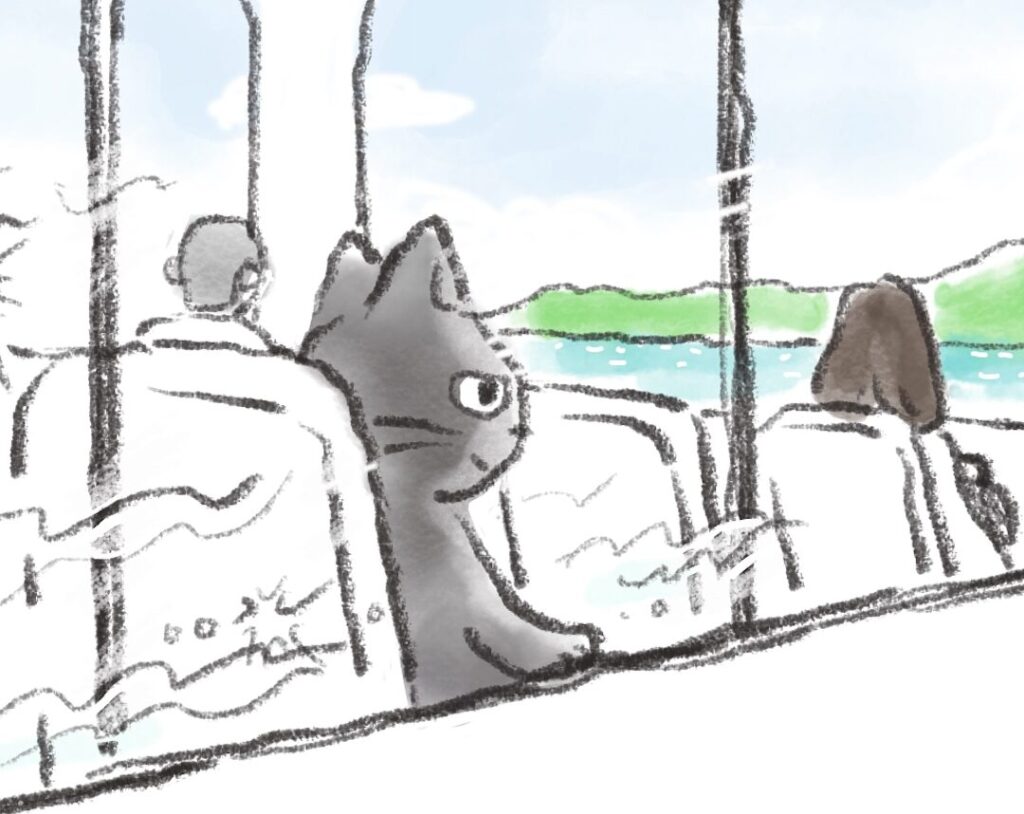
Regardless of the children, I no longer had the energy to walk in the heat, so we decided to take the bus back.
However, there aren't many buses, so there was quite a long wait.
The older two said they would play games in the shade, so my youngest and I went for a walk around the area.
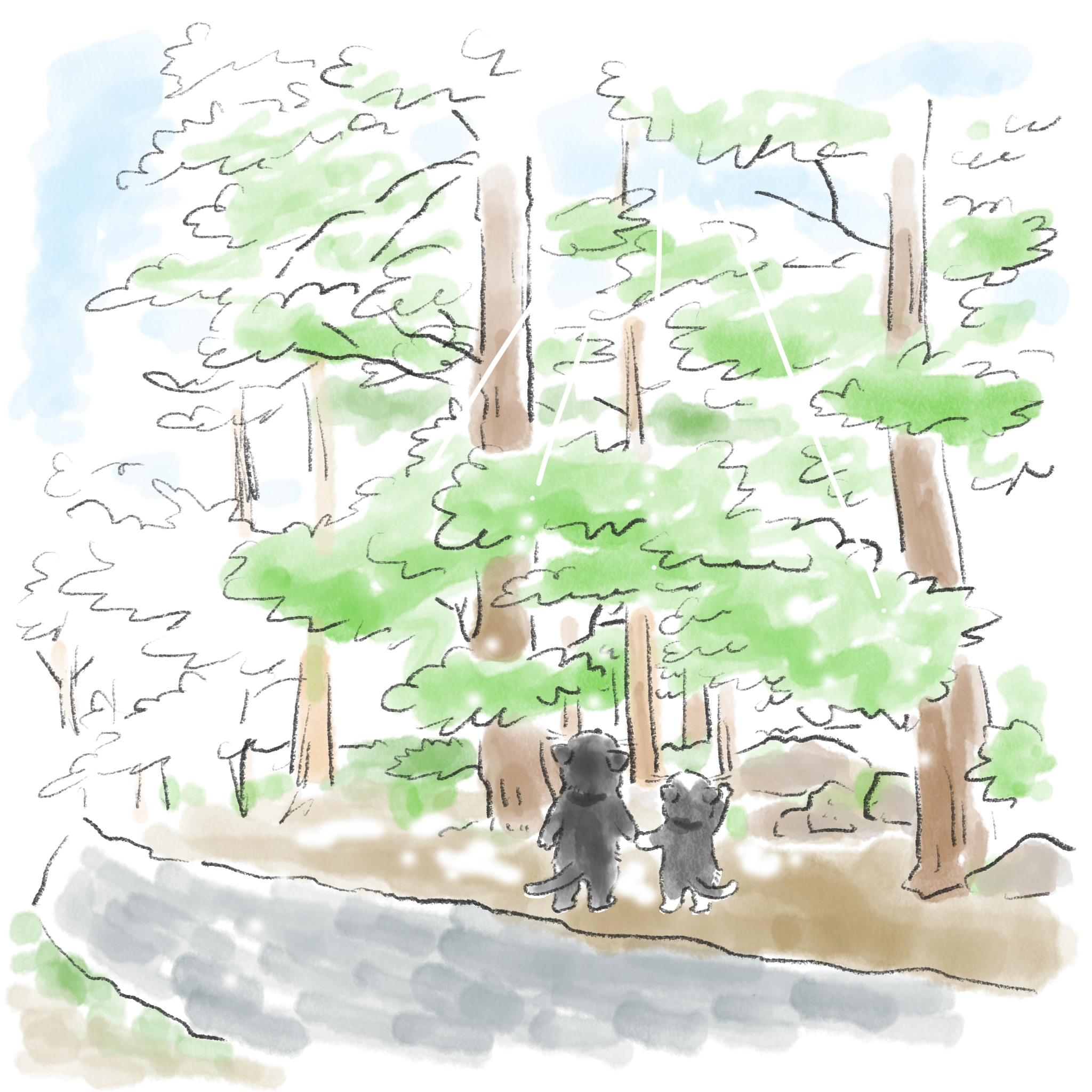
In the deserted, dense grove of trees, the sound of cicadas echoed.
"It's cicadas."
"Yeah. Let's look for cicadas."
But for some reason, we could hear them, but couldn't see them.
With my youngest, I craned my neck 90 degrees and looked up at the trees.
The trees were too tall───.
I've heard that Miyajima is an island of gods, so they don't carelessly cut down trees.
That's why the forest has very rich vegetation, and the tall trees are incredibly high.
It's completely different from the street trees near my house.
The cicadas were calling leisurely high up in the trees, without a shadow or trace.
You can't find us───
Just like that.
Through the gaps in the leaves of the trees we looked up at, the blue sky peeked through.
Seeing that, a memory of catching cicadas at a shrine in Niigata during the summer when I was a child suddenly came back to me.
It was a day we caught many, and when I finally opened the cage, the cicadas all flew up at once and vanished into the sky through the gaps in the leaves.
The trees probably weren't as tall as those in Miyajima, but perhaps they felt very tall because I was a child.
Around us, only the sound of cicadas continued to echo.
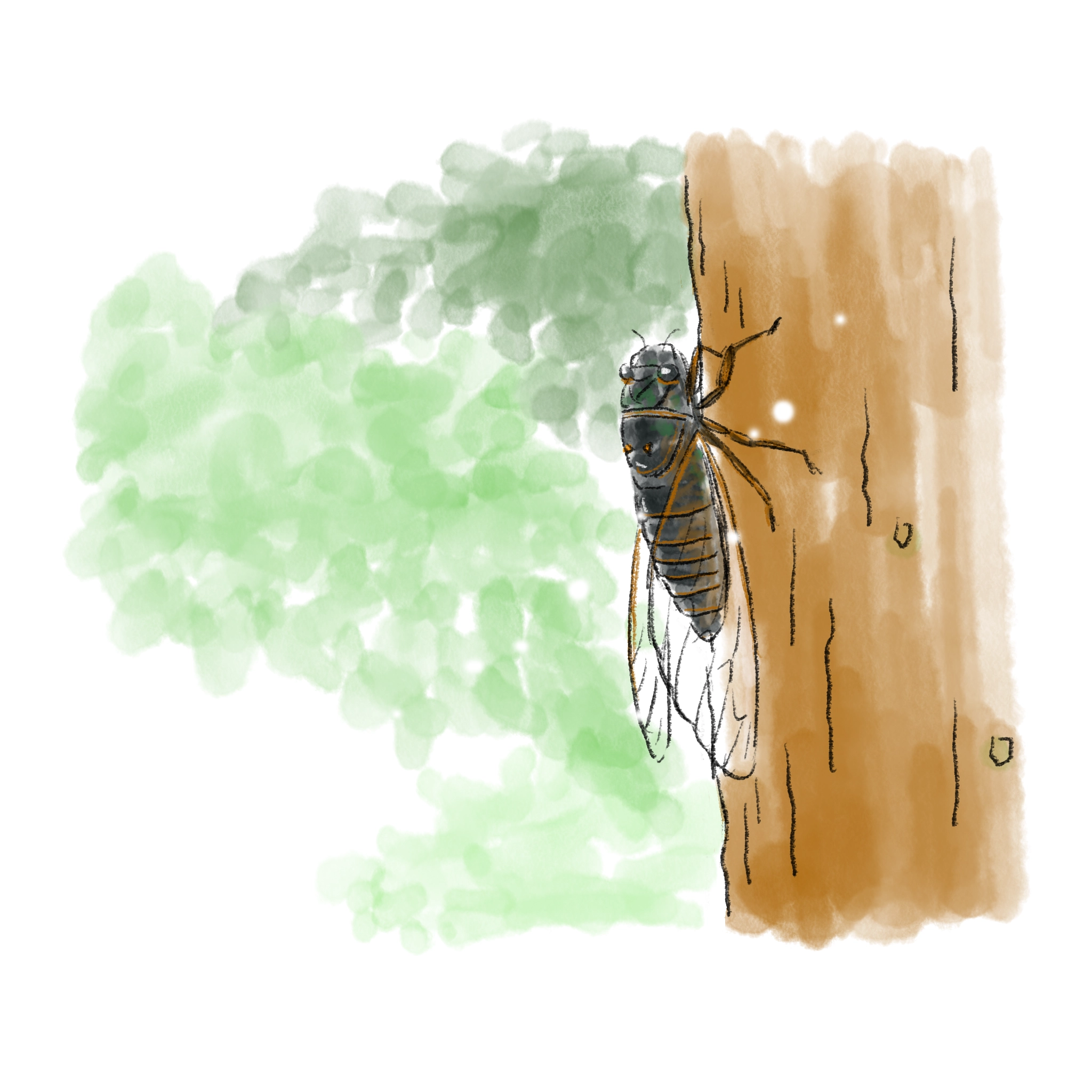
In the end, my youngest, who persevered, spotted a single cicada perched a little lower down.
Unlike the familiar Kumazemi (large brown cicada) or the relatively small Niiniizemi (Platypleura kaempferi), it was quite a small cicada.
I didn't know at the time, but a few years later, according to my youngest, who had grown into a proper young insect expert, the cicada we saw then was "probably a Titchi Cicada."
Apparently, a type of cicada called Haruzemi also sings in Miyajima in spring.
I want to go look for them with my youngest someday.
Text
RIE NAKAJIMA
A writer who spent her childhood in Chiba, Niigata, and Osaka before wandering through Tokyo and abroad, eventually settling in Hatsukaichi, Hiroshima Prefecture, her husband's hometown. She has been told that her great-grandmother was from Miyajima, so she likes to think that, in a way, she has "come back." In her free time, she enjoys visiting cat cafés with her daughter and exploring local sweets.