Moonlight reflects on the sea cradling the illuminated Itsukushima Shrine. A long-overdue visit of gratitude to Miyajima at night, after more than a decade.
#History#Iconic Architecture#Scenic Views
More than ten years ago, when I announced that I was getting married and moving from Tokyo to Hiroshima, a designer colleague told me this story.
“Speaking of Hiroshima, not long ago, my wife and I went to Miyajima. We stayed at a ryokan in Miyajima and took a walk at night.
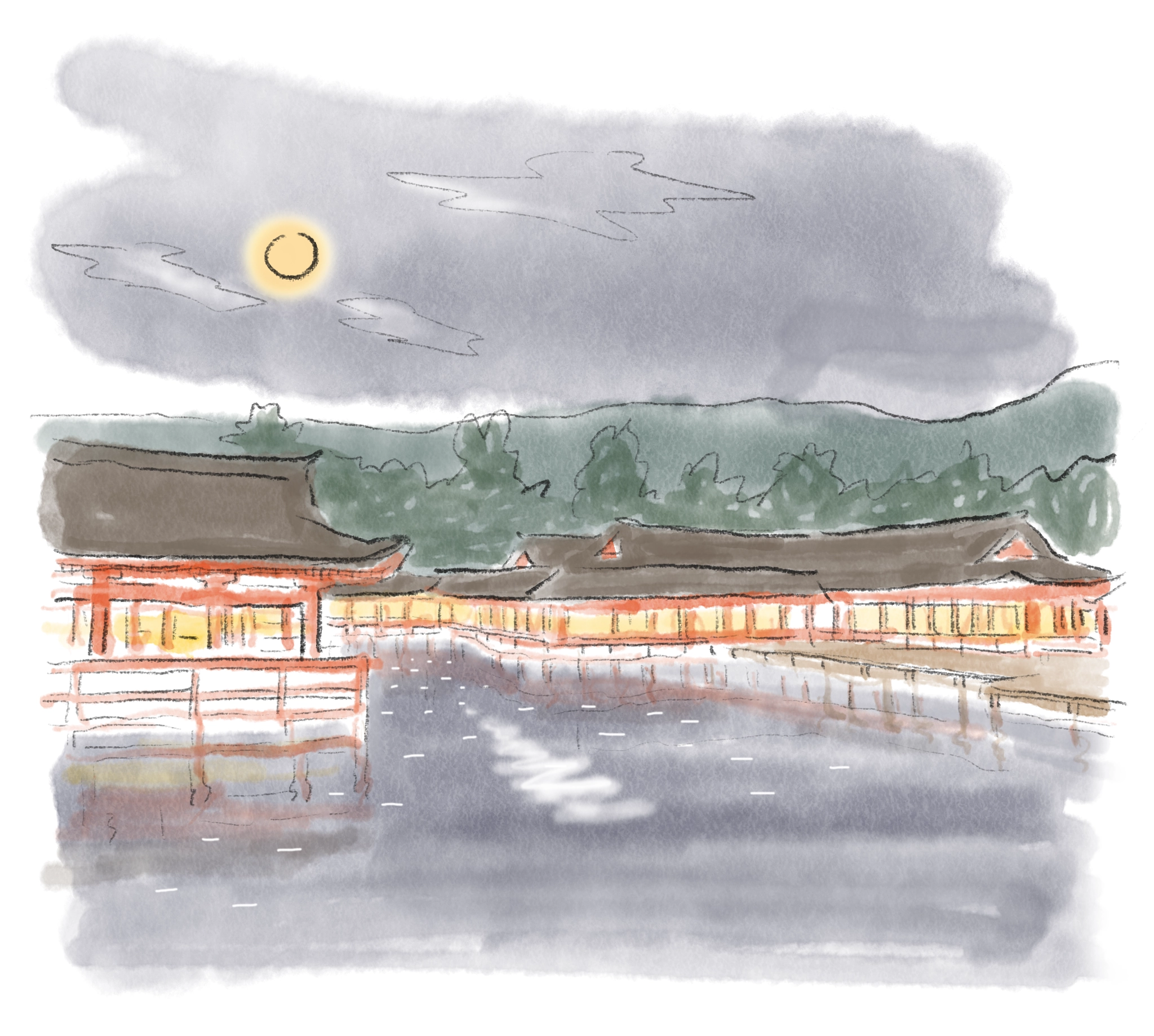
It was almost a full moon night, and the round moonlight was reflecting on the sea around Itsukushima Shrine.
It was so beautiful that my wife and I kept looking at it, saying 'It’s beautiful, isn’t it?'.
…And then, we were blessed with a child.”
He said it was at a time when they had been trying to conceive for many years without success, and had been talking about how they might have to give up soon.
The couple's deep emotions, along with the image of Miyajima at night spread out in my mind’s eye, made a profound impression on me.
At that point, I was also approaching 35, the age defined as advanced maternal age, so I couldn't help but feel it wasn't someone else's problem.
Afterwards, I moved to Hatsukaichi City, my husband's hometown in Hiroshima, and naturally went to visit Itsukushima Shrine, the city's most famous attraction.
It was daytime, but I remember being moved by the atmospheric precincts built in the sea and overwhelmed, thinking “Taira no Kiyomori was truly incredible.”
However, I never had the chance to visit Miyajima at night.
That's because over the next few years, I was blessed with three children, and going out at night itself became extremely rare.
As I was thinking about these things, I suddenly felt like going to Miyajima at night.
Ever since that day, the scenery of Miyajima at night, as if I had experienced it myself, had remained in my memory.
Now that the children have grown up to some extent, I can take them, can't I?
───It's a visit of gratitude more than a decade overdue.
Since I'm going, I want to see the moonlit Itsukushima Shrine floating in the sea, just as that couple saw it.
I checked the tide table on the Miyajima Tourism Association's website, chose a day when high tide would occur in the early evening, and invited the children to go.
Ideally, we would have stayed overnight, but as long as we knew the ferry schedule, which has fewer services at night, we could still enjoy Miyajima at night on a day trip.
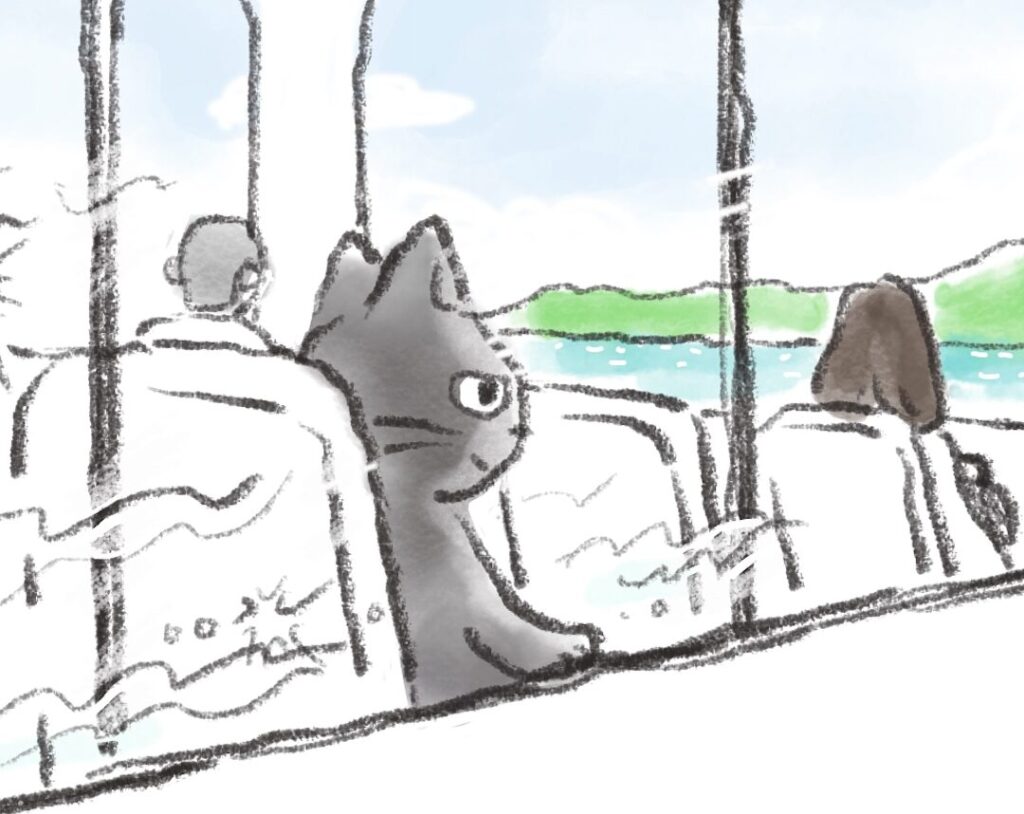
We took the evening ferry to Miyajima.
There were fewer people walking around the island compared to daytime, but it was busier than I expected.
The closing time for visiting Itsukushima Shrine varies by season, from 5 PM to 6:30 PM.
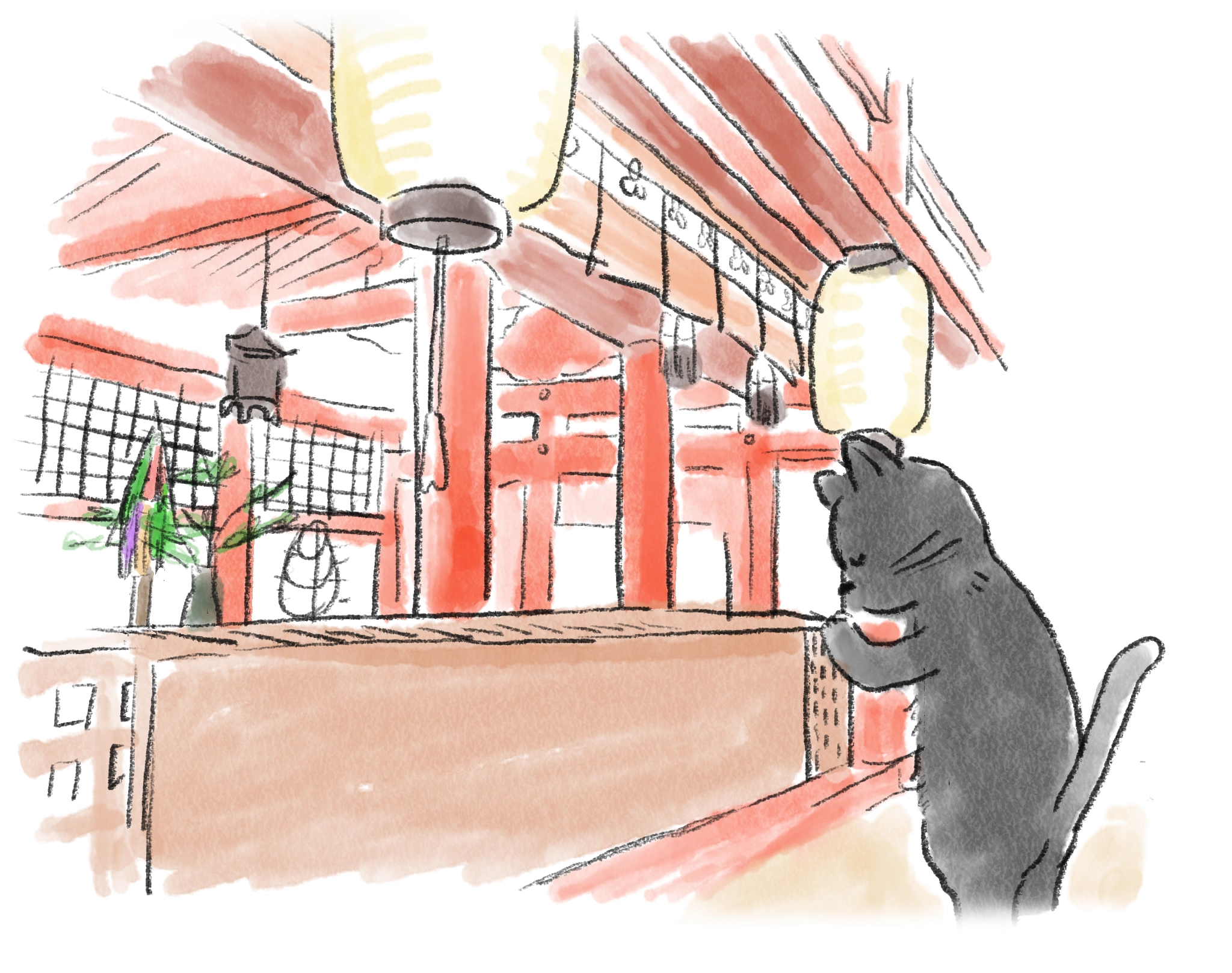
First, we made our long-awaited visit to the shrine.
There were few people in the precincts, and a solemn tension filled the air.
───Thanks to you, my whole family is well. Thank you.
To be honest, until this moment, going to "Miyajima at night" was my priority, and I hadn't even considered that being blessed with children was due to my visit to Itsukushima Shrine.
But once I actually made the visit of gratitude, it all made sense—everything was connected, wasn't it?
Hearing that story from the designer that day, and being able to raise my children here in Hiroshima, it was truly wonderful.
After visiting the shrine, we ate at "Mato-chan," an okonomiyaki restaurant that is open in the evening on certain days.
Many shops in Miyajima close in the evening when tourists leave, so I had researched this in advance.
After our stomachs were full, it was time to wait for the sunset.
We sat side by side on the stone steps by the sea, simply waiting for the sky to darken.
The weather was good, so we unexpectedly got to see a magnificent sunset over the sea and sky.
Orange light painted the pale blue sky like a watercolor.
Waiting for the sun to set by the sea with someone is a true luxury.
We spoke slowly, in slightly softer voices than usual.
“Today at school, I got to play with Tomo-kun and Tomo-tomo.”
My youngest child was talking about "Tomo-kun," a childhood friend, and "Tomotomo," that friend's friend.
Feeling shy about using his name, she's always called him "Tomotomo."
Meanwhile, my daughter has a friend she calls "Shiran-hito" (Unknown Person).
That child was also a friend of a close friend, and since it felt awkward to call each other by nicknames from the start, they apparently began calling each other "Shiran-hito."
And then one day,
“Oh, Shiran-hito.”
“Ah, Shiran-hito.”
As they were exchanging their usual greetings, a child suddenly appeared from the side and said, "I want to be 'Shiran-hito' too," and now the three of them call each other "Shiran-hito."
I laughed and, saying something parental like, "You can build good friendships by calling people by their proper names," I turned my gaze back to the sunset.
At that moment, from across the sea, a memory surfaced like a bubble and disappeared: when I first met my husband, I couldn't bring myself to use the nickname his friends used, so I called him "Onii-san" (Older Brother) until we got married.
So it was connected even to this───.
And somehow, all the tension left me.
Once the sun sets, Itsukushima Shrine is illuminated at night.
Itsukushima Shrine, lit up in the night sea, is awe-inspiring, like a stage backed by immense history.
At the same time, it also exudes a somewhat feminine and elegant beauty.
Come to think of it, weren't the enshrined deities of Itsukushima Shrine three female goddesses?
I've heard a superstition that "because they are female goddesses, couples who visit will be made jealous and break up."
I've heard such superstitions, but I think, 'How could that be?'
No matter what, gods wouldn't be jealous of commoners who can't even call people by their names.
The seawater amply fills every corner of the shrine precincts, and the moonlight sways gently.
───So, this is the view they saw.
After more than a decade, I empathized with that couple again and sighed.
In contrast to the resplendent Itsukushima Shrine, looking towards the forest revealed deep darkness.
“Oh, a fish!”
My youngest, who loves creatures, cried out.
A fish swiftly crossed above the moonlight on the sea.
The illuminated Itsukushima Shrine, the moonlight, and the sight of a fish crossing it became another memory of my "Miyajima at night."
Text
RIE NAKAJIMA
A writer who spent her childhood in Chiba, Niigata, and Osaka before wandering through Tokyo and abroad, eventually settling in Hatsukaichi, Hiroshima Prefecture, her husband's hometown. She has been told that her great-grandmother was from Miyajima, so she likes to think that, in a way, she has "come back." In her free time, she enjoys visiting cat cafés with her daughter and exploring local sweets.